
Discover how stevia supports balanced blood sugar while delivering a natural, reliable sweetness solution for modern food applications.
Introductory Points:
1. History: Stevia is a plant native to Paraguay and Brazil that has been consumed by humans for thousands of years.
2. Sweetness: Stevia leaves contain sweet molecules that can be extracted and used as a tool in the healthy sweetness toolkit.
3. Blood Glucose: Stevia lowers blood glucose in an adaptogenic way via several mechanisms and has an effect on those with pre-diabetes and diabetes.
A Long History of Sweetness.
Did you know that stevia leaves have been consumed by humans for thousands of years for sweetness and for medicinal purposes? Stevia consumption dates to before cane sugar became widespread, as it was used “since time immemorial” by the indigenous peoples’ of Central and South America, according to reports by Swiss botanist Bertoni, and according to the book, ‘Natural History of Plants of The New Spain’, by Spanish physician Francisco Hernandez in 1570-1576.
What exactly is stevia’s impact on blood glucose and metabolic health?
Hundreds of scientific studies have been conducted to understand if and how stevia is health enhancing in various conditions, including the crux of the problem of excess sugar: insulin resistance and high blood glucose. Numerous animal and human studies indicate that stevia lowers blood glucose and improves insulin sensitivity in the context of carbohydrates and high blood glucose. In a ‘normal’ insulin sensitivity and blood glucose context, it does not lower blood glucose too far either – it acts as an adaptogen. Below is a summary of a handful of the many studies exploring if and how stevia works to regulate blood glucose.
Healthy Humans
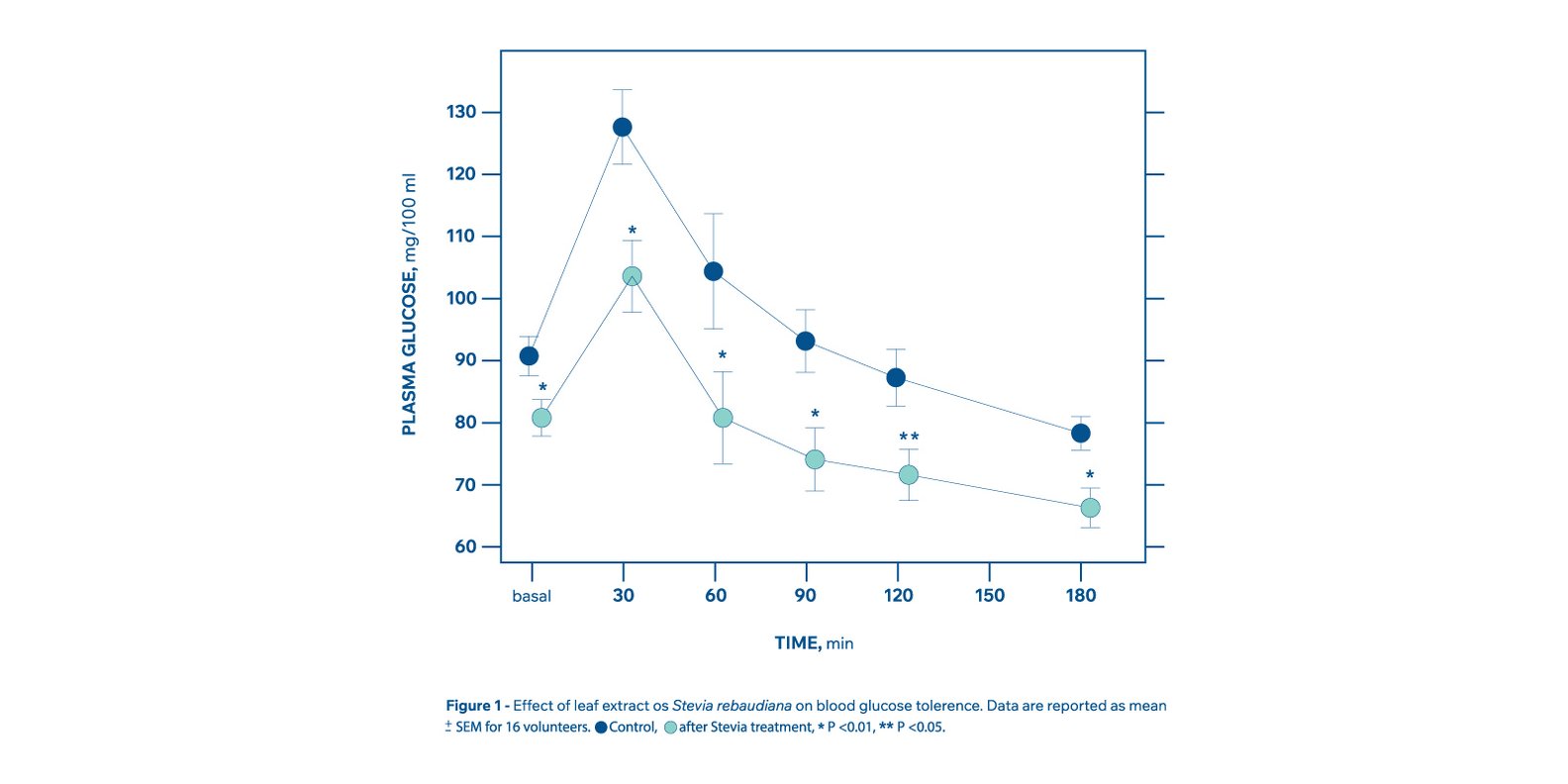
Curi R. et al. (1986): blood glucose curve after oral glucose tolerance test in group who have not received stevia (black dots), vs. those who have received stevia treatment (circles).
Is this amount of stevia leaf extract relevant to us? Yes. A typical stevia-sweetened 330ml drink contains c. 130mg of steviol glycosides, and based on this study’s methodology, it is likely that the 5g infusion doses equated to 520mg of steviol glycosides. Thus, if one were to have several stevia sweetened drinks or snacks in a day, one could achieve a similar level.
Philippaert K. et al. (2017) observed that in a high glucose context, stevia promotes insulin secretion by pancreatic beta cells, whereas in a normal glucose context, it does not, acting in an adaptogenic way. They also found that daily consumption of stevia in animals eating a diabetes-inducing high fat diet prevented diabetic hyperglycemia.
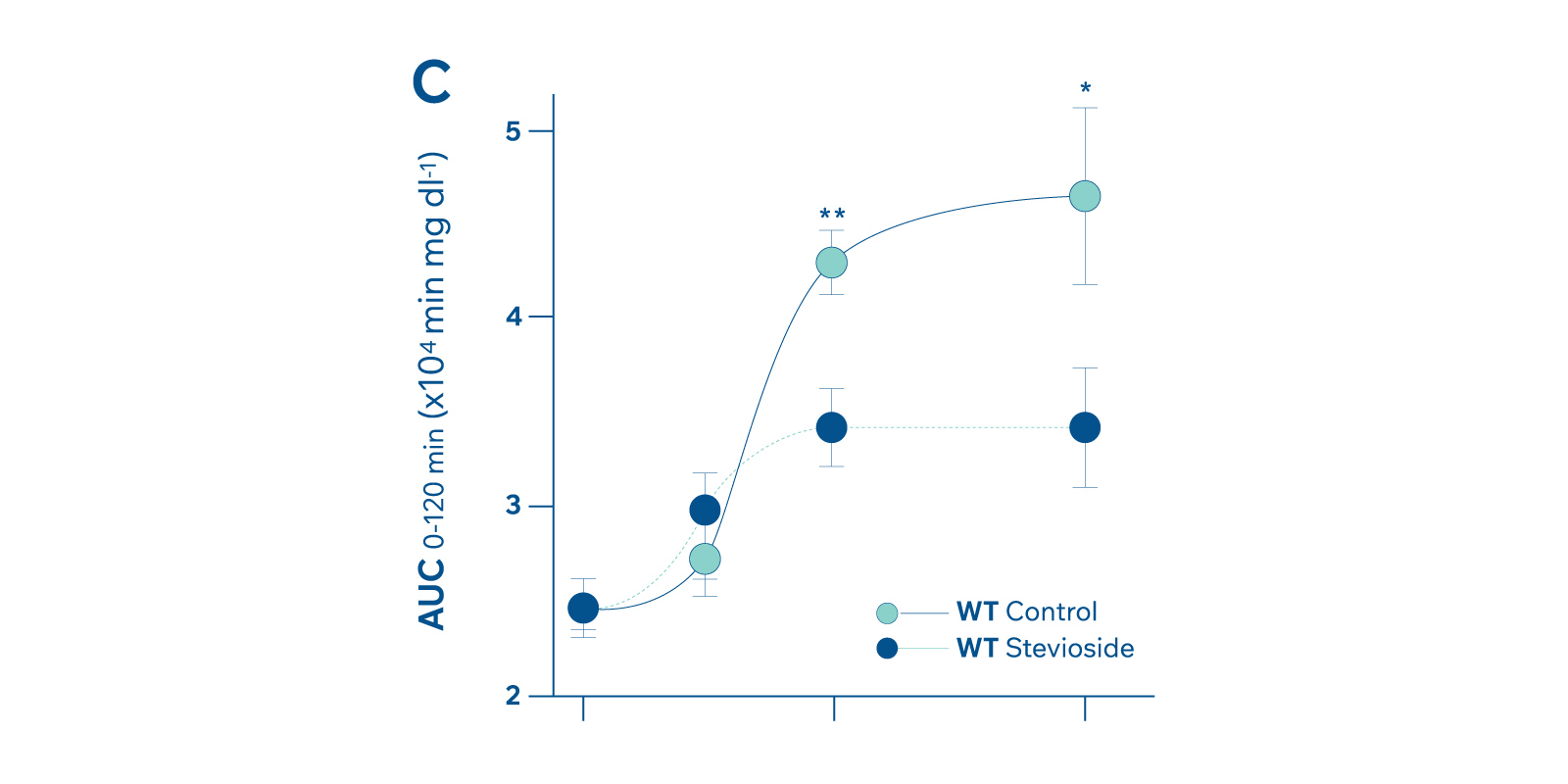
Philippaert K. et al. (2017): glycemia area under the curve in control mice (circles) vs. mice treated with stevioside (black dots).
Humans with Type II Diabetes (T2D)
Both HbA1c (a biomarker for mid-term blood glucose levels) and fasting blood glucose significantly increased in the placebo group (p<0.01 and p<0.007 respectively) during the 3 months, whereas the stevioside group saw no change in these biomarkers compared to when patients were on their blood glucose lowering medications. This points to the potential for stevia to be used as a blood glucose regulating medication itself.
So, how does Stevia help to lower blood glucose in the right context?
How Stevia Lowers Blood Glucose
 Enhances insulin sensitivity, glucose uptake + conversion to glycogen in muscle cells
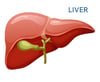 Suppresses gluconeogenesis (glucose production by liver) by suppressing glucagon
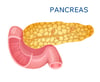 Improves pancreatic beta cell function to modulate insulin response to carbohydrate
What Makes Blood Glucose Too High?Insuline Resistance: Cells are not responding to insulin and taking up glucose.
Early signs of this = in muscle cells.Liver Gluconeogenesis: Liver keeps pumping out glucose
Pancreatic beta cell dysfunction exacerbating insulin resistance and then failing to produce sufficient insulin.
Conclusion
“Some articles on this blog are contributed by external authors. The views and opinions expressed are those of the contributors and do not necessarily reflect the official policy or position of Nutriba. While we aim to share valuable perspectives, we make no representations regarding the accuracy or completeness of third-party content and disclaim any liability arising from its use.Content is for informational purposes only and should not be considered medical or professional advice.”
References:
Curi, R. et al. (1986), ‘Effect of Stevia rebaudiana on glucose tolerance in normal adult humans’, Braz J Med Biol Res. 19(6):771-4.
Philippaert, K. et al. (2017), ‘Steviol glycosides enhance pancreatic beta-cell function and taste sensation by potentiation of TRPM5 channel activity’, Nat Commun 8, 14733.
Gregersen, S. et al (2004), ‘Antihyperglycemic effects of stevioside in type 2 diabetic subjects’, Metabolism. 2004 Jan;53(1):73-6.
Jeppesen, PB. et al. (2006), 'Efficacy and tolerability of oral stevioside in patients with type 2 diabetes: a long-term, randomized, double-blinded, placebo-controlled study', Diabetologia 49 (Suppl 1) AO843.